
Coenzyme Q10 (CoQ10) is a naturally occurring compound found in almost every cell of the body. It is essential for cellular energy production and contributes to antioxidant protection. Levels of CoQ10 decline with age and may be lower in certain health conditions, which has led to increasing interest in supplementation.
This page provides evidence-based information about CoQ10, its potential benefits, dietary sources, supplementation forms, and safety considerations.
What Is CoQ10?
CoQ10, also called ubiquinone, is a fat-soluble compound present in the mitochondria — the energy-producing centres of cells [1]. It plays a key role in generating adenosine triphosphate (ATP), the molecule that powers cellular functions. CoQ10 also acts as an antioxidant, helping to maintain normal cellular function and protect against oxidative stress [1,2].
Why Is CoQ10 Important?
Cellular Energy Production
CoQ10 is critical for mitochondrial function. Organs with high energy demands, such as the heart, liver, and brain, contain higher concentrations [2].
Antioxidant Protection
CoQ10 helps neutralise free radicals, contributing to the maintenance of normal cellular function [2].
Evidence-Based Benefits of CoQ10
Heart Health
Clinical studies indicate CoQ10 may:
- Support quality of life in people with chronic heart failure [3]
- Reduce systolic blood pressure modestly in some individuals [4]
- Potentially ease statin-associated muscle symptoms, although results are mixed [5]
CoQ10 should not replace prescribed cardiovascular medication. Supplementation should always be discussed with a healthcare professional.
Ageing and Cellular Function
Natural CoQ10 production declines with age. Its role in energy metabolism and antioxidant defence has been studied in the context of healthy ageing, supporting energy metabolism at a cellular level [2,6].
Fertility Support
Clinical research suggests CoQ10 may improve sperm quality and motility in men and potentially support egg quality in women experiencing age-related fertility decline [7,8].
Dietary Sources of CoQ10
CoQ10 is present in:
- Organ meats (heart, liver, kidney)
- Oily fish such as sardines and trout
- Nuts and seeds
- Whole grains
- Vegetables such as spinach and broccoli [1]
Typical dietary intake is lower than the amounts used in research studies.
Supplement Forms and Absorption
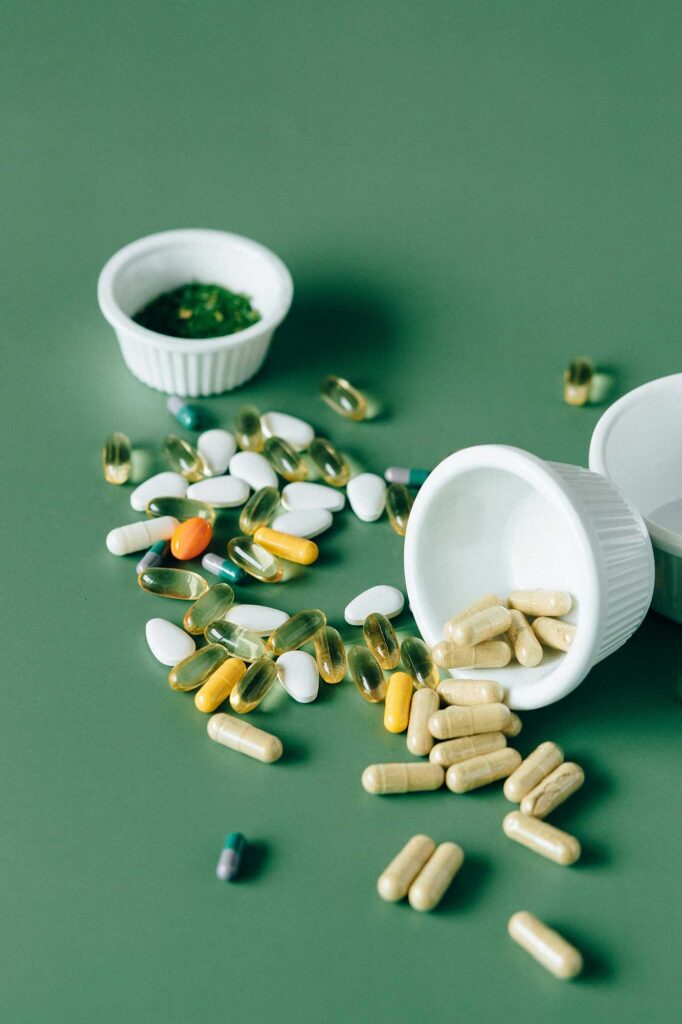
CoQ10 supplements are available in two main forms:
- Ubiquinone, the oxidised form
- Ubiquinol, the reduced form, generally more bioavailable for older adults [9]
Research studies have used daily doses ranging from 100–300 mg, depending on the clinical context [9].
Safety and Interactions
CoQ10 is generally well tolerated. Mild side effects may include digestive discomfort, nausea, or headache.
People taking anticoagulants (e.g., warfarin), chemotherapy, or blood pressure medication should consult a healthcare professional before using CoQ10 [1].
Frequently Asked Questions (FAQ)
1. What is CoQ10?
CoQ10 is a compound found in almost every cell, supporting cellular energy production and antioxidant protection [1,2].
2. Who might benefit from CoQ10 supplementation?
Potential groups include adults over 40, people taking statins, individuals with cardiovascular risk factors, those experiencing fatigue, and men undergoing fertility assessment [3,5,7].
3. What are the dietary sources?
Organ meats, oily fish, nuts, seeds, whole grains, and vegetables such as spinach and broccoli [1].
4. What is the difference between ubiquinone and ubiquinol?
Ubiquinone is the oxidised form, ubiquinol is the reduced, more bioavailable form [9].
5. How much CoQ10 should I take?
Clinical studies have used 100–300 mg per day. Always consult a healthcare professional for personalised guidance [9].
6. Is CoQ10 safe?
Generally well tolerated. Mild digestive discomfort is most common. Medical advice is recommended for people on certain medications [1].
7. How long until effects are seen?
Some notice improvements in energy or muscle function within weeks. Cardiovascular or fertility-related benefits may take months [3,7,8].
References
- National Institutes of Health (NIH) Office of Dietary Supplements. Coenzyme Q10. Available at: https://ods.od.nih.gov/factsheets/CoenzymeQ10-Consumer/
- Mancuso M, Orsucci D, Angelini C. Coenzyme Q10 in neuromuscular and neurodegenerative disorders. Curr Drug Targets 2010;11(2):171–182.
- Fotino AD, Thompson-Paul AM, Bazzano LA, et al. Effect of coenzyme Q10 on heart failure: a meta-analysis. Am J Clin Nutr 2013;97(2):268–275.
- Rosenfeldt F, Hilton D, Pepe S, et al. Systematic review of effect of coenzyme Q10 in physical exercise, hypertension and heart failure. Biofactors 2007;29(3–4):199–210.
- Qu H, He Y, Shi Y. Effects of coenzyme Q10 supplementation on statin-induced myopathy: a systematic review. Phytother Res 2018;32(12):2424–2432.
- Mortensen SA, Rosenfeldt F, Kumar A, et al. The effect of coenzyme Q10 supplementation on endothelial function and cardiovascular risk factors: a meta-analysis. Biofactors 2014;40(2):97–106.
- Safarinejad MR. Effect of coenzyme Q10 on semen parameters and antioxidant status in infertile men. J Urol 2009;182(1):237–248.
- Xu Y, Chen Q, Zhang Q, et al. Effect of coenzyme Q10 supplementation on oocyte quality in women with diminished ovarian reserve: a pilot study. Fertil Steril 2018;109(6):1059–1066.
- Mortensen SA, Rosenfeldt F, Kumar A, et al. The effect of coenzyme Q10 supplementation on endothelial function and cardiovascular risk factors: a meta-analysis. Biofactors 2014;40(2):97–106.