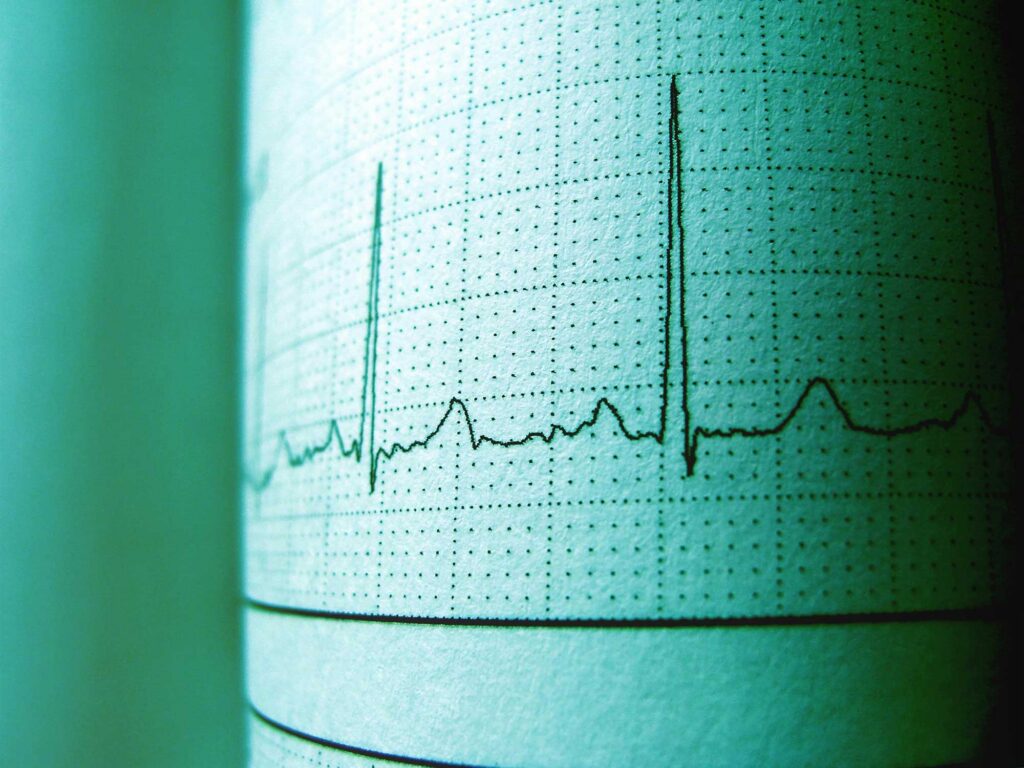
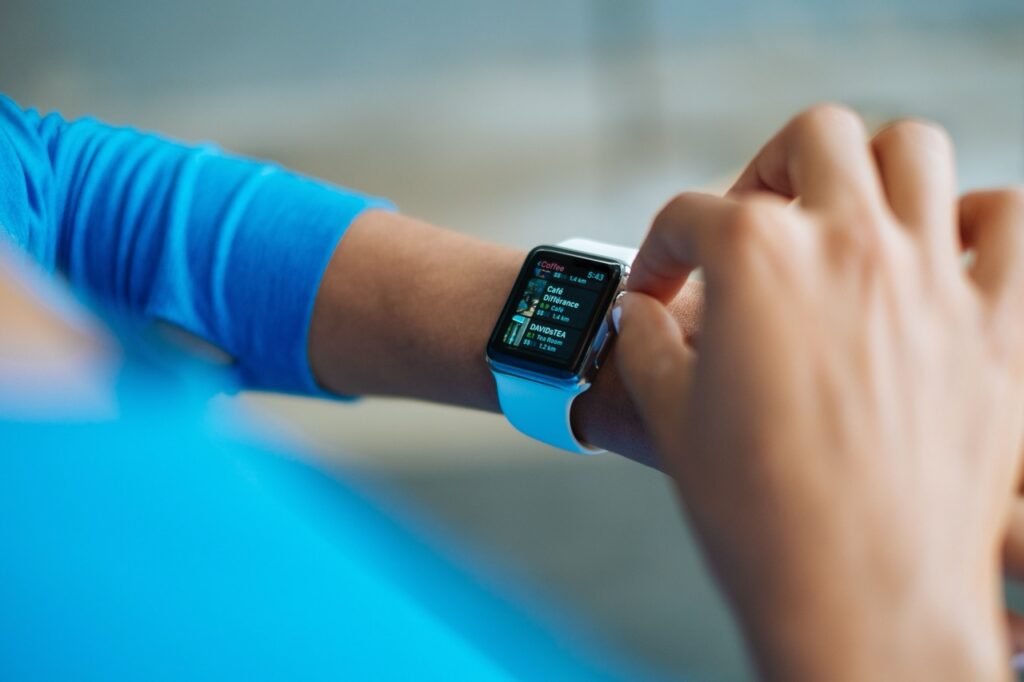
Wearable technology has come a long way from simply counting our steps. Today’s smart rings, watches, connected scales and glucose sensors can provide a much broader picture of everyday physiology.
But with so many devices available, what do they actually tell us?
A window into everyday health
Different wearables measure different aspects of health.
Smart rings such as Oura, Ultrahuman and RingConn focus particularly on sleep, heart rate, heart rate variability, temperature, activity and recovery. Their small size and lack of a screen make them attractive for people who want continuous monitoring without another device demanding their attention.
Smartwatches such as the Apple Watch and Garmin offer broader functionality. Depending on the model, they can provide heart rate monitoring, ECG, sleep and respiratory information, temperature measurements, activity tracking and cardiovascular fitness measures, alongside everyday functions such as GPS and communication. Apple, for example, brings several overnight measures together in its Vitals app, including heart rate, respiratory rate, wrist temperature, blood oxygen and sleep duration.
For people particularly interested in training and recovery, devices such as WHOOP take a different approach, concentrating on sleep, physiological recovery and exercise strain. WHOOP’s recovery metrics incorporate measures including HRV, resting heart rate, sleep and respiratory rate.
Looking beyond the heart
Wearable health technology is increasingly moving beyond heart rate and activity.
Continuous glucose monitors, or CGMs, measure glucose in interstitial fluid and can show how glucose changes over time. This provides a different type of information from a smartwatch or smart ring and can be useful for understanding glucose patterns in relation to food, exercise and daily routines.
Connected scales provide another perspective, tracking weight and, through bioelectrical impedance, estimating measures such as body fat and lean mass.
These technologies are best viewed as tools for monitoring trends, rather than replacing established clinical measurements.
The important caveat: a score isn’t a diagnosis
Wearables can produce appealingly simple numbers such as “readiness”, “recovery”, “stress” or “biological age”.
These should be interpreted carefully.
Some measurements, such as heart rate, are physiological measurements. Others are calculations produced by an algorithm using several inputs.
A change in an app generated score does not necessarily mean that something is medically wrong.
The most useful information is often the pattern over time, particularly a sustained change from an individual’s usual baseline.
Research into consumer wearables has found that accuracy varies according to the measurement, device and circumstances, which is why wearable information should be interpreted with appropriate caution.
So which device is right?
There isn’t one universally best wearable.
For someone primarily interested in sleep and recovery, a smart ring may be attractive.
For broader cardiovascular, fitness and everyday monitoring, a smartwatch may be more appropriate.
For someone focused on exercise and training, a recovery focused wearable or sports watch may be useful.
For those interested specifically in glucose patterns, a CGM provides a different type of information altogether.
In many cases, one well chosen device that a person is comfortable wearing consistently is more useful than several devices producing overlapping measurements.
After all, there is a point at which monitoring your recovery starts to become its own form of exercise.
What comes next?
The technology is developing rapidly.
Researchers are exploring smart patches, clothing, footwear and biochemical sensors capable of monitoring an increasingly wide range of physiological signals. Emerging wearable platforms are being developed to combine physical, biochemical and movement related measurements, although validation, interpretation and integration into clinical care remain important challenges.
The long term vision is compelling. Rather than taking occasional measurements, we may eventually be able to build a much richer picture of how an individual’s physiology changes throughout everyday life.
For private healthcare, this could be particularly valuable when used appropriately. Wearable data may help patients and clinicians identify patterns, monitor lifestyle changes and have more informed conversations about health.
The technology, however, remains a source of information rather than a replacement for clinical judgement.
The future is not necessarily more gadgets
Perhaps the most useful wearable is not the one with the longest list of features.
It is the one that provides meaningful information, fits easily into everyday life and helps us understand our own patterns.
For one person, that might be an Oura Ring quietly tracking sleep overnight. For another, it might be an Apple Watch providing a broader picture of cardiovascular health and activity. Someone focused on training may prefer WHOOP, while someone exploring glucose patterns may find a CGM more relevant.
The goal isn’t to turn ourselves into walking laboratories.
It is to use technology intelligently, so that health data becomes useful information rather than just another set of numbers to worry about.
And if your watch tells you to stand up after two hours at your desk, perhaps it has a point.
Clinical note
Wearable devices vary in their accuracy, validation and intended use. Measurements and algorithm derived scores should be interpreted in context and should not be used to diagnose or exclude medical conditions without appropriate clinical assessment.
References
- Doherty C, Baldwin M, Keogh A, Caulfield B, Argent R, et al. Keeping Pace with Wearables: A Living Umbrella Review of Systematic Reviews Evaluating the Accuracy of Consumer Wearable Technologies in Health Measurement. Sports Medicine. 2024;54:2907–2926.
- Babu M, Lautman Z, Lin X, Sobota MHB, Snyder MP. Wearable Devices: Implications for Precision Medicine and the Future of Health Care. Annual Review of Medicine. 2024;75:401–415.
- Cherian J, Mascia G, Kairamkonda D, Fisher A, McGinnis RS, Ray TR. Wearable Sensing for Clinical Physiology Monitoring: Emerging Paradigms. Physiology. 2026;41(4).
- Mahato K, Saha T, Ding S, Sandhu SS, Chang AY, Wang J, et al. Hybrid multimodal wearable sensors for comprehensive health monitoring. Nature Electronics. 2024;7:735–750.
- Apple. Apple Watch and Health. Apple. Information on ECG, heart rate, sleep, respiratory rate, wrist temperature, blood oxygen and other health features.
- WHOOP. Recovery and Strain. Information on HRV, resting heart rate, sleep, respiratory rate and recovery metrics.
- Xue Z, Gai Y, Liu Y, Li Z, et al. Wearable mechanical and electrochemical sensors for real time health monitoring. Communications Materials. 2024.
- Recent advances in smart wearable sensors for continuous human health monitoring. Talanta. 2024;272:125817.