
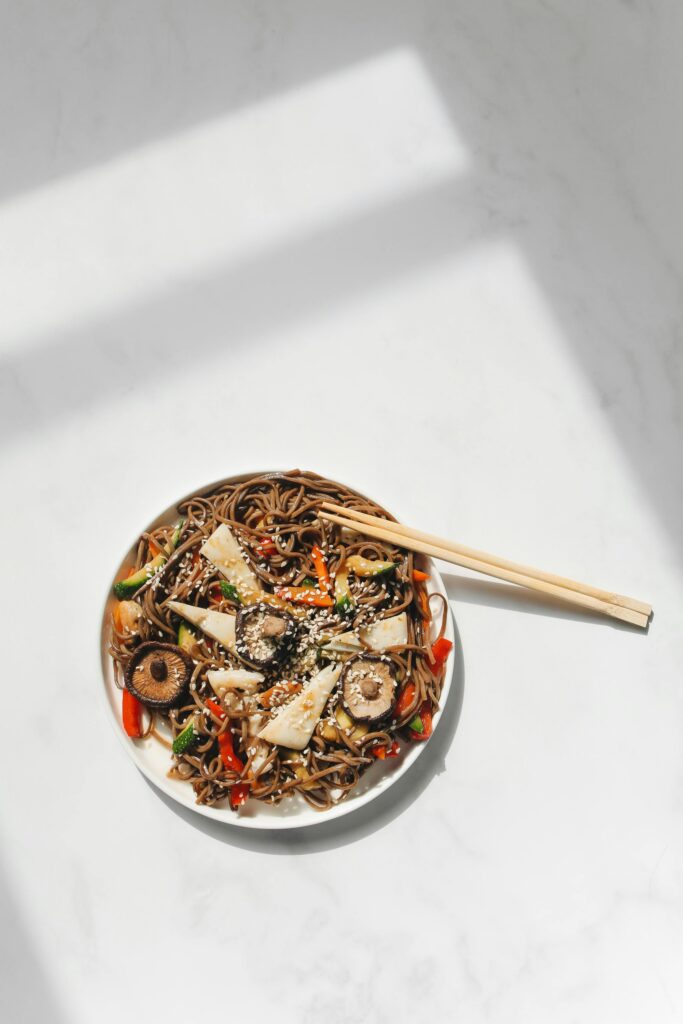
Soba Noodle Soup

A warm, nourishing bowl featuring 100% buckwheat soba noodles, gently cooked vegetables, and a light, savoury broth. This recipe is free from wheat and dairy and uses simple, minimally processed ingredients.

Ingredients (Serves 2)

Broth

  • 4 cups organic bone broth or vegetable broth 
  • 2 tbsp coconut aminos
  • 1 tsp sesame oil
  • 1 tbsp freshly grated ginger
  • 1 tbsp apple cider vinegar 

Noodles

  • 180 g 100% buckwheat soba noodles

Vegetables 

  • 1 carrot, thinly sliced
  • 1 cup zucchini slices
  • 1 cup baby spinach or bok choy
  • 2 spring onion green tops only

Protein 

  • Wild salmon
  • Free-range chicken
  • Organic firm tofu 

Instructions

  1. Cook soba noodles separately, rinse, set aside
  2. In a saucepan, gently warm sesame oil + ginger (no browning)
  3. Add broth, coconut aminos, vinegar. Simmer for 5 minutes
  4. Add carrots & zucchini → simmer 3–4 minutes
  5. Add protein until cooked
  6. Stir in greens last
  7. Serve broth over noodles

Toppings

  • Sesame seeds 
  • Nori strips 
  • Fresh parsley or coriander 

Approximate nutrition for just broth + vegetables:

  • Calories: 70 kcal
  • Protein: 3 g
  • Fat: 3 g (mostly from sesame oil)
  • Carbohydrates: 10 g
  • Fiber: 3 g
  • Sodium: 700–900 mg (varies with broth used)
  • Vitamin A: ~7000 IU (carrot + greens)
  • Vitamin C: 20 mg
  • Iron: 2 mg
  • Calcium: 80 mg

Noodles (per 90 g dry per serving)

  • 100% buckwheat soba noodles (90 g dry, ~100 g cooked)

Nutrition (per serving):

  • Calories: 300 kcal
  • Protein: 11 g
  • Fat: 1 g
  • Carbohydrates: 64 g
  • Fibre: 5 g
  • Magnesium: 80 mg
  • Manganese: 1.2 mg

Total nutrition values will vary depending on the protein selected and specific brands used.

Dr. Patel

Dr. Patel is deeply passionate about medical research and helping her patients improve their daily routines, reduce symptoms, and enhance overall health.

More Articles

Body Composition, Protein Requirements and Nutritional Quality Across the Lifespan: A Clinical Perspective

For many years, body weight has been used as a primary marker of health. However, weight alone is a limited metric. It does not distinguish between adipose tissue, skeletal muscle, bone mass or fluid balance. Increasingly, evidence suggests that body composition and metabolic health provide a more meaningful framework for clinical discussions than weight loss in isolation. As clinicians, it is important that public health messaging remains evidence based, proportionate and free from oversimplification. This includes recognising that nutritional needs

Read More »

Iron. Haem, Non Haem and Why It Matters for Women’s Health

Iron is fundamental to human life. It forms the core of haemoglobin, the protein in red blood cells that transports oxygen around the body. It is also essential for energy production, cognitive performance and normal immune function. Iron deficiency remains the most common nutritional deficiency worldwide and disproportionately affects women. Menstrual blood loss, pregnancy and increased requirements during the reproductive years all contribute. Guidance from the NHS recognises iron deficiency anaemia as a common and clinically significant condition in the

Read More »

Vitamin D. Bone Strength, Immunity and Women’s Wellbeing

Vitamin D is often described as a vitamin, yet in biological terms it behaves more like a hormone. It plays a central role in calcium absorption, bone metabolism, muscle function and immune regulation. In the United Kingdom, maintaining adequate levels is a recognised public health issue, particularly for women, older adults and people with darker skin. According to the NHS, vitamin D deficiency and insufficiency are common, especially during autumn and winter when ultraviolet B sunlight is too weak at

Read More »