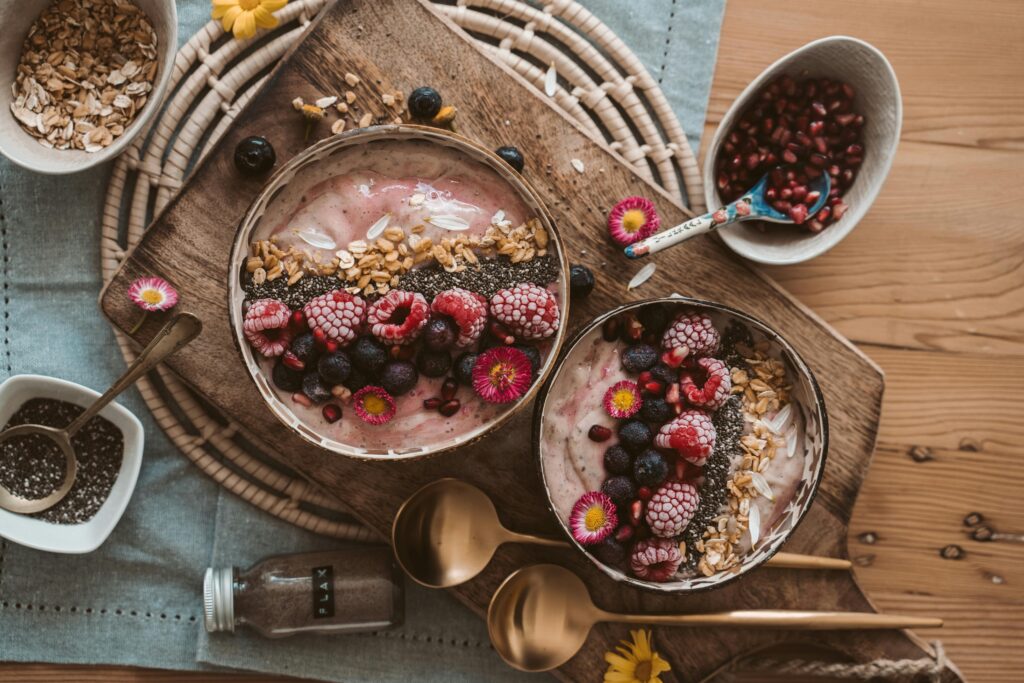
Acai Rainbow Bowl

Servings: 2
Preparation time: 10 minutes
No cooking required

Ingredients

For the Base:

  • 1 pack (100g) frozen unsweetened acai puree
  • 250ml beetroot juice
  • 2 tablespoons flax seeds
  • 3 tablespoons soy or coconut yogurt (e.g., Alpro)


For the Toppings:

  • 1 cup mixed berries (strawberries, blackberries, raspberries)
  • 18 cashew nuts or 3 Brazil nuts
  • 2 tablespoons rolled oats
  • 1 tablespoon chia seeds
  • 1 teaspoon desiccated coconut
  • 1 teaspoon cacao nibs

Instructions

  1. Prepare the Base:
    • Soak the flax seeds in the beetroot juice for at least 10 minutes.
    • In a blender or food processor, combine the acai puree, soaked flax seeds with the beetroot juice, and soy or coconut yogurt. Blend until smooth and well combined.
    • Transfer the base mixture to a bowl.
  2. Add the Toppings:
    • Arrange the mixed berries, cashew nuts, Brazil nuts, and rolled oats on top of the base.
    • Sprinkle with chia seeds, desiccated coconut, and cacao nibs.
  3. Serve and Enjoy:
    • Serve the acai rainbow bowl immediately for the best texture and flavor.

Notes

  • Gluten-free, dairy-free (if using coconut yogurt), and sugar-free.

  • Acai is rich in antioxidants and fibre.

  • Beetroot juice contributes iron, magnesium, and vitamin B6.

  • Flax seeds and nuts provide omega-3 fatty acids, protein, and micronutrients.

  • Mixed berries, oats, chia seeds, coconut, and cacao nibs add texture, flavour, fibre, and vitamins.


Optional Enhancements (to make it a fuller meal)

  • Protein sources: Greek yogurt or plant-based yogurt, nut butters, protein powders

  • Healthy fats: Nut butters, nuts and seeds, avocado slices

  • Whole grains: Granola (low sugar), oats, quinoa

  • Fibre boosters: Extra chia seeds, flax seeds, berries

  • Thicker bases: Frozen banana, avocado, nut butters, yogurt

  • Adjust liquids: Reduce milk or coconut water to thicken the base


    Nutritional Information (per serving, approx. for 2 servings)

    • Calories: 380 kcal

    • Fat: 18 g

      • Saturated Fat: 3 g

    • Carbohydrates: 42 g

      • Sugars: 18 g

    • Fibre: 11 g

    • Protein: 9 g

    • Sodium: 45 mg

    Values are estimated based on typical ingredients and portion sizes.
    Dr. Patel

    Dr. Patel is deeply passionate about medical research and helping her patients improve their daily routines, reduce symptoms, and enhance overall health.

    More Articles

    What Is Manuka Honey. Myth, Medicine or Madness

    Manuka honey has moved from health food shop curiosity to clinically recognised wound treatment. But is it a miracle substance, a misunderstood traditional remedy, or simply clever marketing wrapped in scientific language. The answer, as ever in evidence based medicine, lies somewhere in between. Where It Comes From Manuka honey is produced by bees that pollinate the Leptospermum scoparium shrub, native to New Zealand and parts of Australia. What sets it apart from conventional honey is its concentration of methylglyoxal,

    Read More »

    Supplements Are Tools, Not Solutions

    True longevity is built on well-functioning physiological systems. It cannot be bought in a bottle, nor can capsules alone deliver lasting vitality. Supplements, when used wisely, have a role but only within the proper hierarchy of health. They are short-term corrective tools first, performance amplifiers second, and never a substitute for solid behaviour and an aligned environment. If your body’s foundational systems are unstable, no supplement can restore balance on its own. Longevity Is About Systems, Not Symptoms Our bodies

    Read More »

    Coenzyme Q10 (CoQ10): Evidence-Based Support for Energy and Heart Health

    Coenzyme Q10 (CoQ10) is a naturally occurring compound found in almost every cell of the body. It is essential for cellular energy production and contributes to antioxidant protection. Levels of CoQ10 decline with age and may be lower in certain health conditions, which has led to increasing interest in supplementation. This page provides evidence-based information about CoQ10, its potential benefits, dietary sources, supplementation forms, and safety considerations. What Is CoQ10? CoQ10, also called ubiquinone, is a fat-soluble compound present in

    Read More »