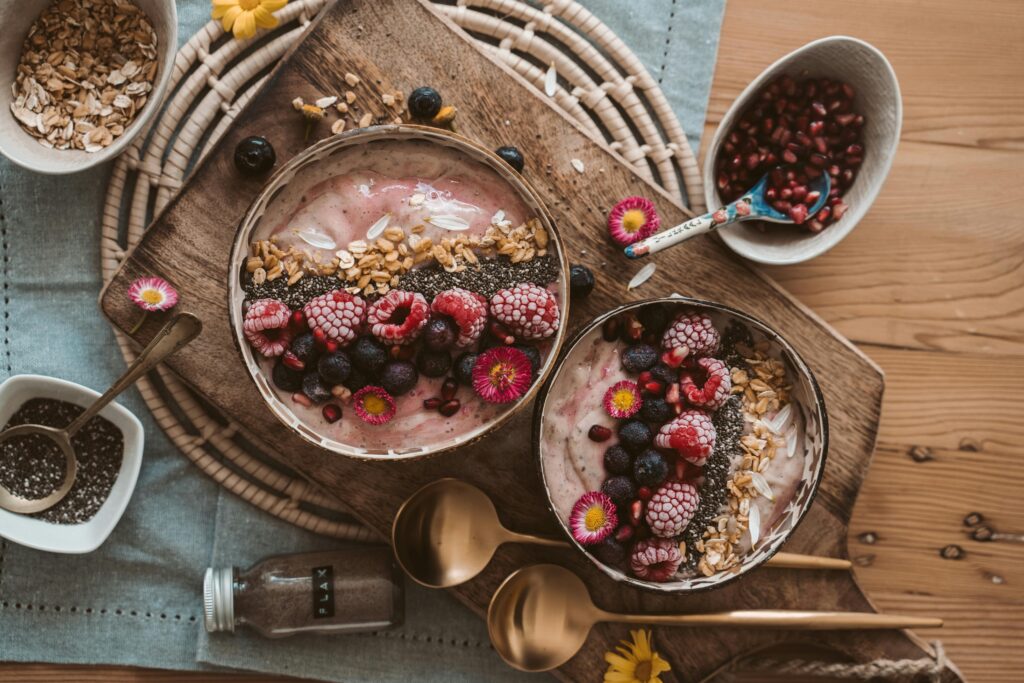
Acai Rainbow Bowl

Servings: 2
Preparation time: 10 minutes
No cooking required

Ingredients

For the Base:

  • 1 pack (100g) frozen unsweetened acai puree
  • 250ml beetroot juice
  • 2 tablespoons flax seeds
  • 3 tablespoons soy or coconut yogurt (e.g., Alpro)


For the Toppings:

  • 1 cup mixed berries (strawberries, blackberries, raspberries)
  • 18 cashew nuts or 3 Brazil nuts
  • 2 tablespoons rolled oats
  • 1 tablespoon chia seeds
  • 1 teaspoon desiccated coconut
  • 1 teaspoon cacao nibs

Instructions

  1. Prepare the Base:
    • Soak the flax seeds in the beetroot juice for at least 10 minutes.
    • In a blender or food processor, combine the acai puree, soaked flax seeds with the beetroot juice, and soy or coconut yogurt. Blend until smooth and well combined.
    • Transfer the base mixture to a bowl.
  2. Add the Toppings:
    • Arrange the mixed berries, cashew nuts, Brazil nuts, and rolled oats on top of the base.
    • Sprinkle with chia seeds, desiccated coconut, and cacao nibs.
  3. Serve and Enjoy:
    • Serve the acai rainbow bowl immediately for the best texture and flavor.

Notes

  • Gluten-free, dairy-free (if using coconut yogurt), and sugar-free.

  • Acai is rich in antioxidants and fibre.

  • Beetroot juice contributes iron, magnesium, and vitamin B6.

  • Flax seeds and nuts provide omega-3 fatty acids, protein, and micronutrients.

  • Mixed berries, oats, chia seeds, coconut, and cacao nibs add texture, flavour, fibre, and vitamins.


Optional Enhancements (to make it a fuller meal)

  • Protein sources: Greek yogurt or plant-based yogurt, nut butters, protein powders

  • Healthy fats: Nut butters, nuts and seeds, avocado slices

  • Whole grains: Granola (low sugar), oats, quinoa

  • Fibre boosters: Extra chia seeds, flax seeds, berries

  • Thicker bases: Frozen banana, avocado, nut butters, yogurt

  • Adjust liquids: Reduce milk or coconut water to thicken the base


    Nutritional Information (per serving, approx. for 2 servings)

    • Calories: 380 kcal

    • Fat: 18 g

      • Saturated Fat: 3 g

    • Carbohydrates: 42 g

      • Sugars: 18 g

    • Fibre: 11 g

    • Protein: 9 g

    • Sodium: 45 mg

    Values are estimated based on typical ingredients and portion sizes.
    Dr. Patel

    Dr. Patel is deeply passionate about medical research and helping her patients improve their daily routines, reduce symptoms, and enhance overall health.

    More Articles

    DUTCH Test: Understanding Hormone Patterns with Home Testing

    The DUTCH Test (Dried Urine Test for Comprehensive Hormones) is a private laboratory assessment designed to evaluate hormone patterns, metabolites, and related markers using dried urine samples collected at home. Unlike standard blood tests, the DUTCH Test measures multiple hormones across the day to provide a broader view of hormone metabolism and daily rhythms. What Is the DUTCH Test? The DUTCH Test is an at-home hormone test that uses multiple dried urine samples collected throughout the day. It assesses: The

    Read More »

    Why B Vitamins Matter and Why the Form You Take Is Important

    B vitamins are a group of water-soluble nutrients that play important roles in energy metabolism, nervous system function, and overall wellbeing. Each B vitamin contributes to different physiological processes: B1 (Thiamine): Supports energy metabolism and nerve function. B2 (Riboflavin): Involved in energy production and acts as an antioxidant. B3 (Niacin): Supports metabolism and contributes to skin health. B5 (Pantothenic Acid): Helps the body metabolise fats, carbohydrates, and proteins. B6 (Pyridoxine / P-5-P): Supports brain function, neurotransmitter synthesis, and red blood

    Read More »

    Eat Your Greens: Support Your Gut, Hormones and Sleep 

    Cruciferous vegetables such as broccoli, kale, cabbage, cauliflower, and Brussels sprouts contain compounds called indoles. These naturally occurring compounds may contribute to overall wellbeing beyond digestion. How indoles May Support health Hormone Processing Compounds like indole-3-carbinol (I3C) and 3,3’-diindolylmethane (DIM) are involved in the body’s natural pathways for processing oestrogen. Including cruciferous vegetables as part of a balanced diet can support these natural metabolic processes. Gut Health Gut bacteria convert tryptophan from dietary protein into beneficial indole compounds. These compounds

    Read More »